


Every eighteen months or so, a video circulates of someone with paralysis controlling a cursor, a robotic arm or a game with their thoughts. The response follows a predictable arc: amazement, a wave of commentary about the future of human-computer interaction, some speculation about consumer applications, and then silence until the next video.
What almost never appears in that cycle is the sentence that matters most: no brain-computer interface is currently approved as a medical device in any major jurisdiction.
That is not a technicality. It is the single most important fact about the field, and it explains nearly everything about where the money goes, what the companies say, and how long the timeline actually is.
Feasibility and approval are different problems
The demonstrations are real. Implanted electrode arrays can decode motor intention with enough fidelity for meaningful control. Speech decoding has produced results that would have been considered implausible a decade ago. Participants in these trials are doing things that were not previously possible, and the researchers involved are doing serious work.
None of that is what regulators evaluate. A regulator assessing an implanted neural device is asking a different set of questions: what happens to the tissue around the electrodes over ten years, how does signal quality degrade, what is the explantation procedure and its risk profile, what is the infection rate at scale rather than in a handful of carefully managed participants, what happens when the device fails, who is liable when the decoding is wrong, and what the failure modes look like in a patient population less closely supervised than a trial cohort.
Those questions cannot be answered faster than time passes. A ten-year durability question requires ten years, or a credible accelerated model that regulators accept — and for a novel implant class, accelerated models have thin precedent. This is the rate limit on the field, and no amount of capital or engineering talent relaxes it.
Edgewisely’s comparison of the leading BCI companies on human evidence, regulatory status and real limitations is unusually clear-eyed about this gap, and the gap is where any serious assessment of the sector has to start.
The strategic split this creates
Because approval is the bottleneck, companies in the field have effectively split into two strategies, and they are not competing with each other in any meaningful way.
The first is maximum capability: high channel counts, invasive placement, ambitious decoding, aimed at restoring function that is currently unrestorable. The scientific ceiling is highest here and so is the regulatory burden. These companies are running a decade-scale programme and financing it on the promise of a very large eventual market.
The second is minimum viable invasiveness: less capable interfaces placed through existing, well-understood surgical routes, with correspondingly smaller regulatory novelty. The capability ceiling is lower. The path to a first approval is considerably shorter, because the regulator is being asked to evaluate a smaller delta from things it already understands.
Neither strategy is obviously correct, and investors should stop pretending otherwise. The first wins if capability turns out to be the binding constraint on adoption. The second wins if regulatory precedent turns out to be — and precedent compounds, because the first approved device in a class makes every subsequent one easier.
Where the consumer narrative goes wrong
The persistent public framing of BCI as a consumer technology — thought-controlled devices, direct neural interfaces for ordinary users — is not merely premature. It is a category error that distorts how the field is funded and discussed.
Implanted devices carry surgical risk. Surgical risk is acceptable in exchange for restoring lost function to someone with a severe impairment. It is not acceptable in exchange for a marginally better input method for someone who can already use their hands. The risk-benefit calculation that makes medical BCI defensible does not survive translation to a healthy population, and no regulator is going to pretend otherwise.
Non-invasive approaches avoid the surgical objection but hit a physics problem: signal quality through the skull is poor, and the gap between what non-invasive sensing can resolve and what useful control requires is large. Progress there is real but incremental, and it is not obviously converging on consumer-grade reliability.
The practical consequence is that the consumer narrative pulls attention and capital toward the least defensible part of the field while the genuinely important work — restoring communication and movement to people who have lost them — is judged against a timeline borrowed from consumer electronics. That is unfair to the researchers and misleading to everyone else.
What a realistic assessment looks like
If you are evaluating this sector as an investor, a partner, or simply as someone trying to calibrate expectations, a few markers are worth more than any demonstration video.
Participant counts and duration. How many humans, implanted for how long, with what retention. A dozen participants at five years is a far stronger signal than fifty at six months.
Explantation data. What happens when the device comes out is a question every regulator asks and very few press releases answer.
Regulatory pathway named specifically. “In discussions with regulators” is not a pathway. A named designation, a defined trial endpoint and an agreed comparator are.
Reimbursement thinking. A device that is approved but not reimbursed reaches almost nobody. Companies that have not begun thinking about who pays are solving the second-hardest problem and ignoring the hardest.
Funding structure. Decade-scale regulatory programmes require patient capital, and the composition of the cap table tells you whether the company can survive its own timeline. The growing role of public and strategic capital in long-horizon health technology — visible in developments like the European Commission’s scaleup fund making its first healthcare bet — matters more in this sector than in most, because conventional venture timelines and clinical timelines are badly mismatched.
The ethical questions that arrive with approval
There is a set of issues the field has so far been able to defer because nothing is approved, and which become urgent the moment something is.
Device longevity is the first. An implant is supported by a company, and companies fail, get acquired, or discontinue product lines. Patients in earlier neurotechnology trials have already experienced the situation where a device remains in their body after the organisation supporting it stopped doing so — the hardware works until it does not, and then there is nobody to service it. Any approval regime that does not require a funded continuity plan is creating that problem at scale.
Data is the second. Neural recordings are among the most intimate data imaginable, and the frameworks governing them are borrowed from general health privacy law rather than written for signals that correlate with intention. What a device manufacturer may retain, analyse or use for model improvement is currently governed mostly by consent documents that patients sign while facing a life-altering surgical decision, which is not a context in which meaningful consent is easy to obtain.
Neither question stops the technology, and neither should. But both are considerably easier to answer before a market exists than after, and the field has an unusually clear opportunity to get ahead of them.
Brain-computer interfaces will probably become an approved and eventually routine medical technology. The evidence supports that. What the evidence does not support is any particular date, and the field would be better served by commentary that treated the regulatory question as the main event rather than as a footnote to the demonstration.
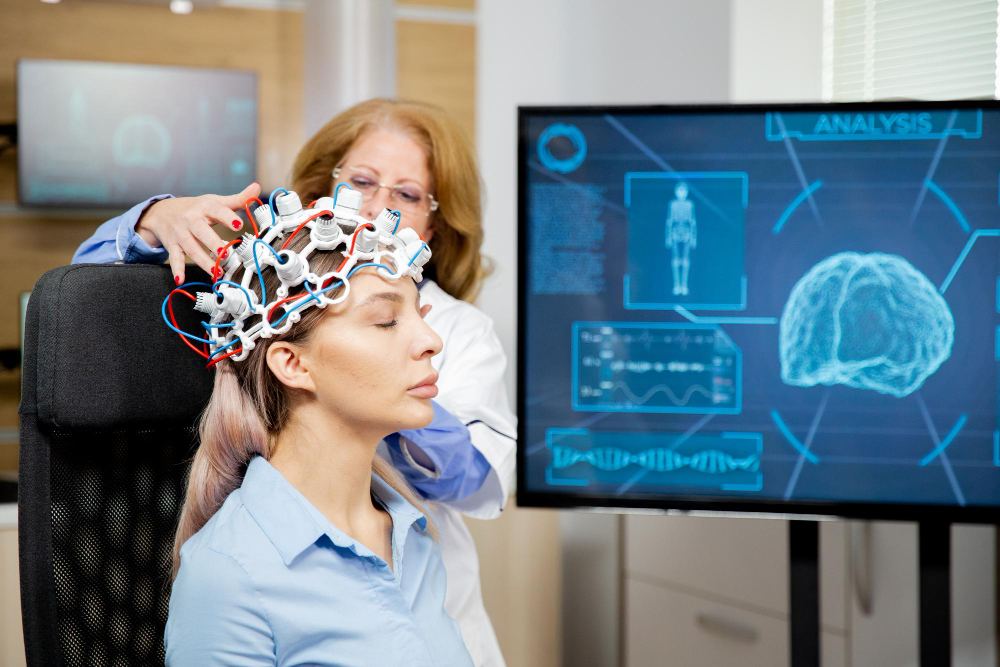
Image by DC Studio on Magnific

Write For Us Technology is a trusted platform for sharing expert-driven insights on modern technology, digital marketing, and emerging innovations. Our editorial team includes SEO professionals, developers, and tech writers who actively work in the industry and bring practical, real-world experience to every article.