




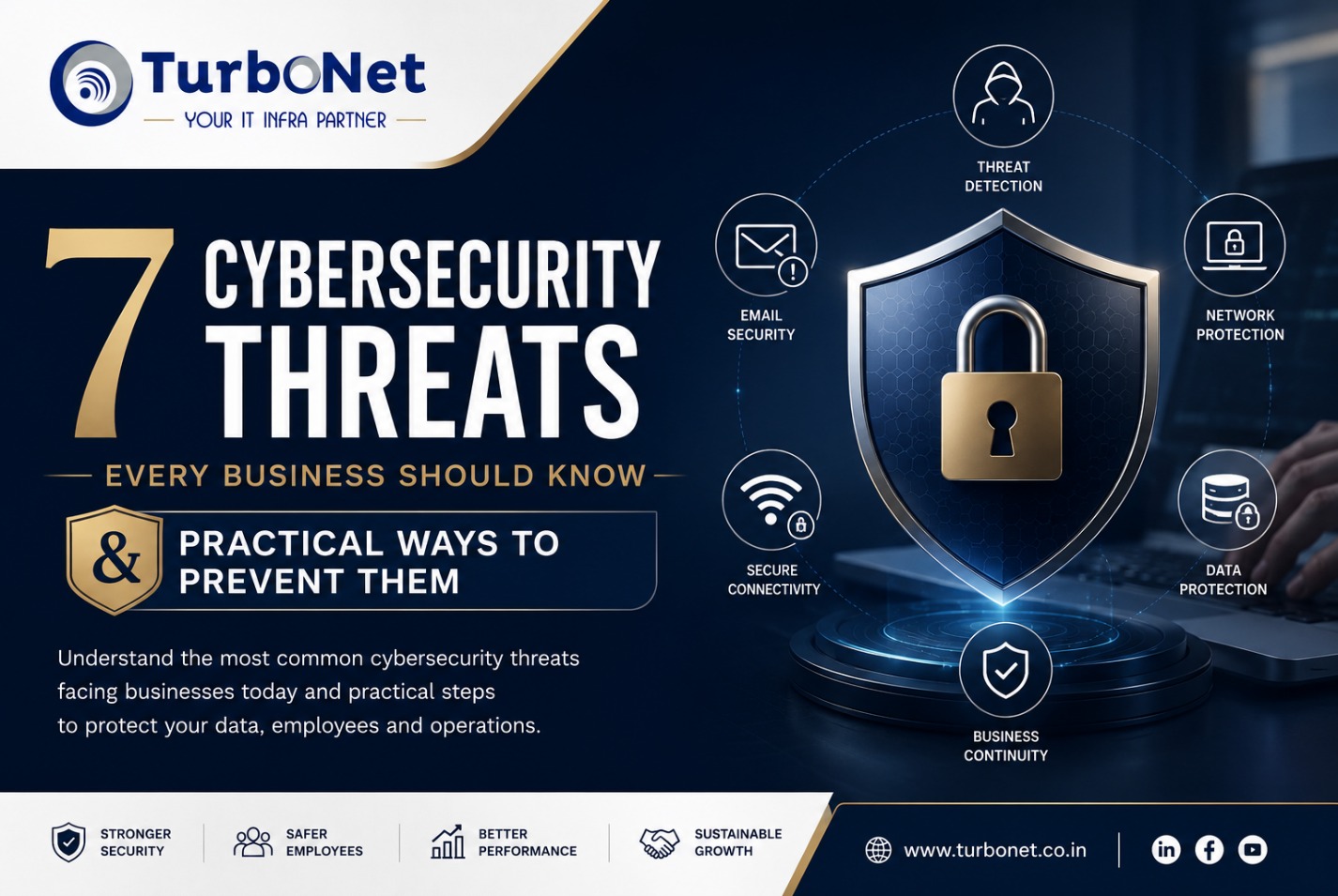
Every business today depends on technology. Customer records, financial transactions, employee communication, cloud applications, and business operations all rely on digital systems. While this digital transformation has improved efficiency, it has also expanded the opportunities for cybercriminals.
Cybersecurity is no longer just an IT concern, it is a business priority. A single cyberattack can interrupt operations, expose confidential information, damage customer trust, and result in significant financial losses. Small and medium-sized businesses are increasingly becoming targets because attackers know they often have fewer security controls than large enterprises.
The good news is that many cyberattacks can be prevented with the right awareness, technology, and security practices. Understanding the most common threats is the first step toward building a stronger defence. Before implementing security tools, businesses should first understand what cybersecurity is, why it matters, and how different security layers work together to protect business data and IT infrastructure. With that foundation in place, it becomes much easier to identify potential risks and take the right preventive measures. Below are seven cybersecurity threats every business should know, along with practical ways to reduce the risk.
1. Phishing Attacks
Phishing remains one of the most successful cyberattacks because it targets people instead of systems. Attackers send convincing emails or messages that appear to come from trusted organizations. Employees may unknowingly click a malicious link, download an infected attachment, or reveal login credentials.
Prevention: Train employees regularly, verify unusual payment requests, avoid clicking unknown links, and enable multi-factor authentication for business accounts.
2. Ransomware
Ransomware encrypts business files and demands payment to restore access. It can stop operations within minutes and recovering from an attack is often expensive.
Prevention: Maintain secure backups, patch systems promptly, deploy endpoint protection, and restrict administrator privileges.
3. Malware
Malware includes viruses, spyware, worms, and trojans that can steal information, slow systems, or create backdoors for attackers.
Prevention: Use trusted antivirus software, install applications only from reliable sources, and perform regular security scans.
4. Weak Passwords
Weak or reused passwords remain one of the easiest ways for attackers to gain access.
Prevention: Use strong unique passwords, implement password managers, enable MFA, and review user permissions regularly.
5. Insider Threats
Not every cyber risk comes from outside the organization. Employees or contractors can accidentally expose data or misuse access.
Prevention: Apply role-based access, monitor unusual activity, and provide ongoing cybersecurity awareness training.
6. Unpatched Software
Outdated software contains known vulnerabilities that attackers actively exploit.
Prevention: Enable automatic updates where possible, patch operating systems and business applications quickly, and maintain an inventory of devices.
7. Unsecured Networks
An insecure network creates opportunities for data theft and unauthorized access. Firewalls, secure Wi-Fi, monitoring, and network segmentation play a major role in protecting business operations. However, network security alone is not enough. A well-planned IT infrastructure provides the foundation for secure connectivity, proactive monitoring, reliable backups, and business continuity, helping organizations stay resilient against modern cyber threats.
Prevention: Secure your business network with enterprise-grade firewalls, encrypt Wi-Fi networks, monitor network activity regularly, segment critical systems, and invest in reliable IT infrastructure solutions that support secure networking, proactive monitoring, and long-term business continuity.
Building a Cybersecurity-First Culture
Technology alone cannot eliminate cyber risks. Businesses should create a culture where employees understand their role in protecting information. Regular awareness sessions, security policies, routine backups, access reviews, and continuous monitoring help reduce risk and improve resilience. Cybersecurity should be treated as an ongoing business process rather than a one-time project.
Conclusion
Cyber threats continue to evolve, but businesses are not powerless against them. By understanding the most common risks and investing in preventive measures, organizations can protect their people, data, and reputation. The combination of employee awareness, secure infrastructure, timely updates, and proactive IT management creates a stronger foundation for long-term business growth.

Arvind Chavan is the Founder and Managing Director of Turbonet Systems Pvt. Ltd., a trusted managed IT service provider with over two decades of experience in delivering IT infrastructure, network security, enterprise connectivity, cloud solutions, and digital transformation services. He is passionate about helping businesses build secure, scalable, and future-ready technology environments that support long-term growth.